

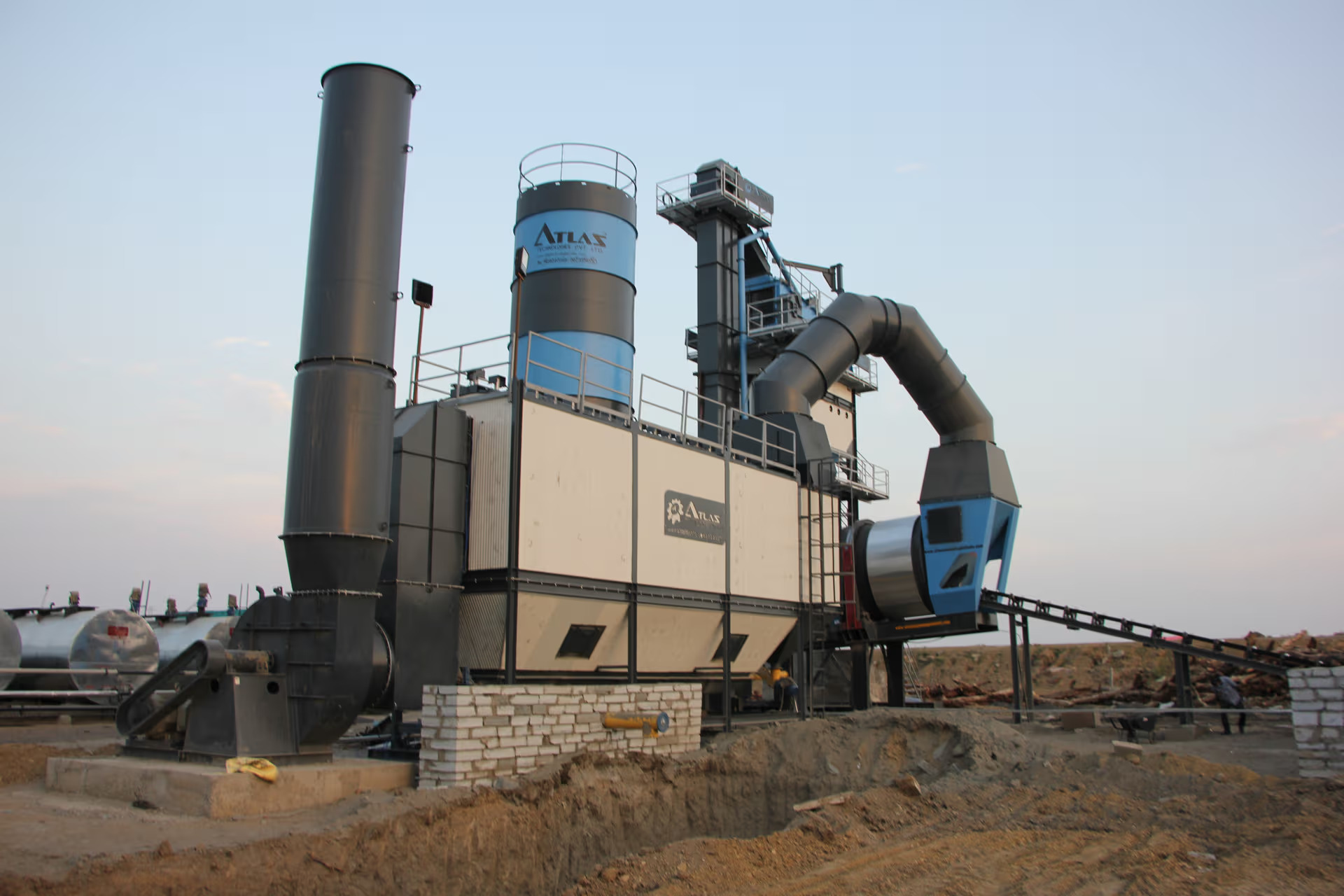
Fuel is the highest variable cost for asphalt plants in India. For example, a 120 TPH drum mix plant running on diesel can spend ₹4-6 lakhs per month on fuel alone, which can be 35-40% of total production costs.
Still, many contractors do not know if their fuel use is normal, too high, or very inefficient.
This article gives you the numbers you need, including industry benchmarks for asphalt plant fuel use, reasons your costs may differ, equipment comparisons, and five steps you can take this week to cut fuel expenses.
Whether you run a hot-mix plant for highways or a small-batch mix plant, knowing your fuel use helps you spot efficiency problems before they hurt your profits.
The Benchmark: How Much Fuel Should Your Plant Actually Use?
| Plant Type | 3-5% Moisture | 5-8% Moisture | >8% Moisture |
|---|---|---|---|
| Parallel Flow Drum Mix | 8-10 L/ton | 10-12 L/ton | 13-16 L/ton |
| Counter-Flow Drum Mix | 4-6L/ton | 7-9 L/ton | 9-11 L/ton |
| Asphalt Batch Mix Plant | 5-7L/ton | 9-11 L/ton | 11-14 L/ton |
| Natural Gas Burner (any type) | 6-7 m³/ton | 7-8 m³/ton | 8-10 m³/ton |
Asphalt plant fuel consumption varies based on equipment type, aggregate conditions, and operating practices. Here’s what industry data shows for typical Indian installations.
What these numbers mean
A 120 TPH asphalt batch mix plant with normal moisture (2-4% moisture) should use about 600 to 700 liters per day. If your plant often uses more, there may be efficiency issues.
Why should you track fuel use closely?
Fuel use per ton is your earliest warning system for:
- Burner calibration drift (fuel consumption increases 1-2% monthly without intervention)
- Insulation degradation (worn drum insulation loses heat efficiency gradually)
- Dryer efficiency loss (worn flights reduce aggregate drying, requiring higher heat)
- Moisture management failures (wet aggregates need disproportionately more fuel)
Contractors who check fuel use every week spot problems quickly. If you only check once a month, you could miss four weeks of extra costs.
The 5 Factors Determining Your Actual Fuel Consumption
Knowing the benchmarks is useful, but understanding why your plant’s numbers differ is even more important.
Factor 1: Aggregate Moisture Content (Biggest Variable)
Aggregate moisture is the main reason fuel use goes up. Wet aggregates need much more heat to dry before mixing.
The math: Every 1% increase in aggregate moisture increases fuel consumption 1.5-2%. If moisture jumps from 4% to 8%, expect fuel use to rise 6-8%.
Indian seasonal patterns:
- Monsoon months (Jun-Sep): Aggregate moisture 6-8% → Higher fuel costs
- Summer months (Mar-May): Aggregate moisture 2-4% → Lower fuel costs
- Winter months (Nov-Feb): Aggregate moisture 3-5% → Moderate costs
Contractors who work year-round see fuel costs change by 30-40% with the seasons, even when plant settings remain the same. Knowing this helps you avoid worry if August costs are higher than June.
Solution: Buy aggregate moisture sensors ($3,000- $5,000). Automatic moisture control can cut fuel waste by 5-8% each year and often pays for itself in six months.
Factor 2: Ambient Temperature
Cold weather increases fuel use. In winter, dryers need extra heat to both remove moisture and warm the materials.
A Himalayan contractor operating at 2,500m elevation needs 10-15% more fuel than a coastal contractor at sea level operating the same equipment. Thin air contains less oxygen for combustion.
When starting up in Delhi during winter, fuel use can be 15-20% higher at first, but it returns to normal after a few weeks as temperatures even out.
Factor 3: Burner Condition & Calibration
Dirty burner nozzles, wrong air-fuel mix, and poor flame patterns can quietly raise fuel use by 5-15%.
Warning signs of burner issues:
- Inconsistent flame appearance
- Temperature overshooting target (burner cycles on/off wildly)
- Visible smoke during operation (incomplete combustion)
- Increasing noise from the combustion chamber
A ₹10,000 burner nozzle replacement that prevents 10% fuel waste returns value within weeks.
Factor 4: Insulation Degradation
Asphalt drum insulation wears out over 3-5 years. As heat loss slowly increases, operators often turn up the burner without realizing the insulation is failing.
Plants with good insulation use 8-10 liters of fuel per ton. If insulation is 40% worn out, fuel use jumps to 12-14 liters per ton, which is 50% higher for the same output.
Re-insulation investment ($2-3 lakhs for 120 TPH plant) typically returns through fuel savings in 12-18 months.
Factor 5: Plant Age & Wear
Older equipment naturally uses more fuel. For example, a 10-year-old plant can use 20-30% more fuel than a 2-year-old plant of the same design, if everything else is the same.
Worn drum flights, deteriorated seals, and mechanical friction accumulate gradually but measurably impact efficiency.
Counter-Flow vs Parallel Flow: The ₹ Difference Over 5 Years
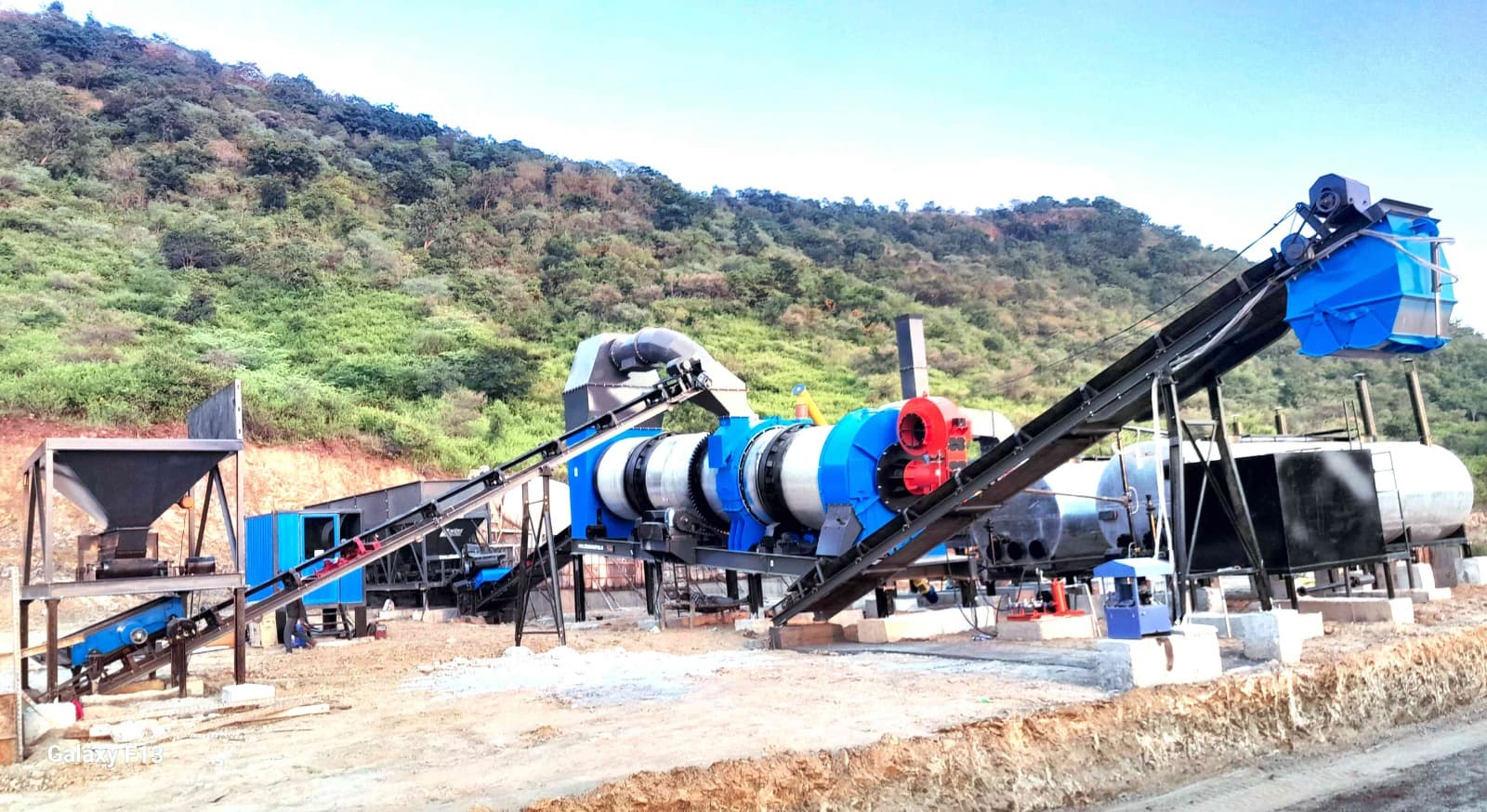
The design of your asphalt drum mix plant has a direct impact on fuel consumption and long-term operating cost. Counter-flow technology improves heat transfer by moving hot gases and aggregates in opposite directions, allowing more efficient utilization of thermal energy.
As a result, counter-flow plants typically consume 40–50% less fuel compared to conventional parallel-flow plants.
The real financial impact depends on your plant's production volume, operating hours, and fuel price. The table below compares fuel consumption on a per-ton basis, allowing you to calculate savings based on your actual production.
| Metric | Parallel Flow | Counter-Flow | Counter-Flow Advantage |
|---|---|---|---|
| Fuel Consumption | 8–10 L/ton | 4–6 L/ton | 40–50% lower fuel use |
| Fuel Cost at ₹95/L | ₹760–950 per ton | ₹380–570 per ton | ₹380–₹475 saved per ton |
| Annual Fuel Savings | Depends on annual production | Depends on annual production | Savings increase directly with output |
| 5-Year Fuel Savings | Depends on plant utilization | Depends on plant utilization | High-volume plants can recover the higher initial investment significantly faster |
| Equipment Investment | Standard system cost | Typically ₹30–50 lakh higher | Payback depends on annual production and fuel savings |
For example, a contractor producing 1 lakh tons per year can save approximately ₹3.8–4.75 crore in fuel costs over five years, depending on actual fuel consumption and operating conditions.
Although counter-flow equipment typically involves an additional investment of ₹30–50 lakhs, the lower fuel consumption can often recover this cost within a short operating period for plants with high annual production.
For Indian asphalt plant operators, where fuel contributes nearly 35–40% of total operating expenses, choosing a fuel-efficient plant design can have a substantial impact on long-term profitability.
For the full financial case on what that fuel saving is worth in rupees per year on a 120 TPH plant, including RAP savings and CPCB compliance costs, see our counterflow asphalt plant profitability breakdown .
CNG vs HSD vs LDO: Choosing the Right Fuel
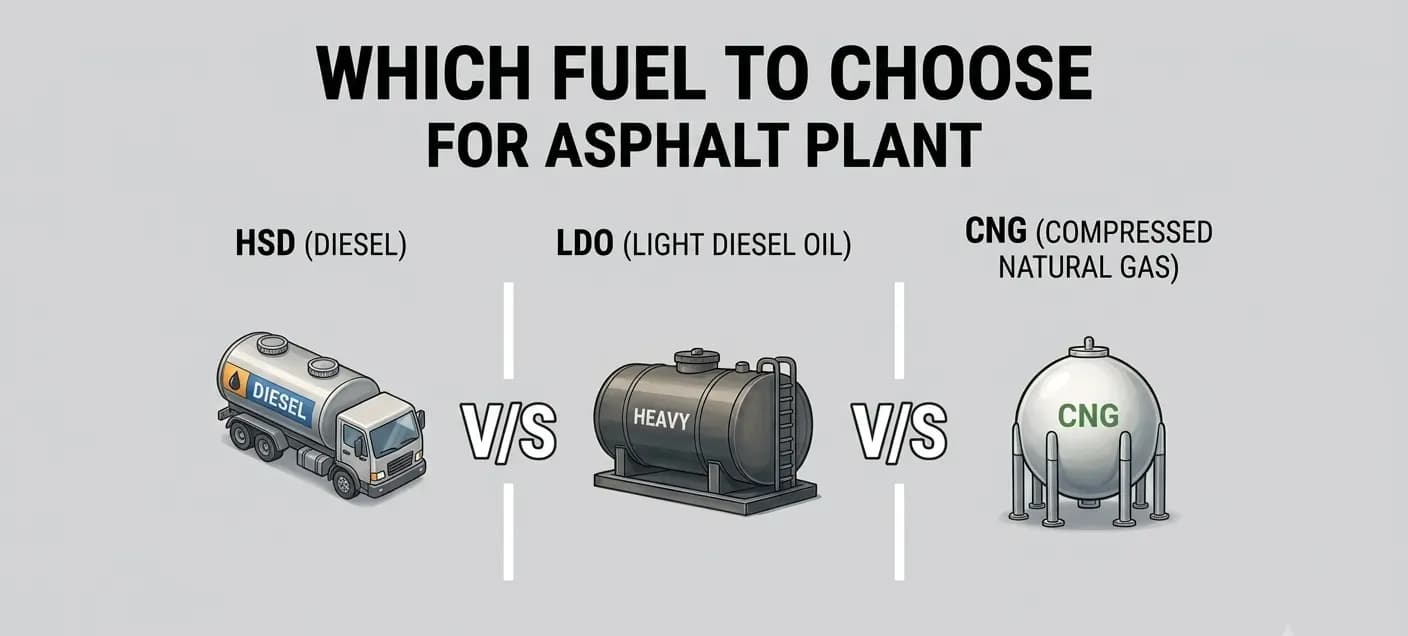
Asphalt plant fuel consumption calculations require understanding the available fuel types in India. Each has advantages and limitations.
| Fuel Type | Cost/Unit (2026) | Availability | Consumption Rate | ₹/Ton Cost | Best For |
|---|---|---|---|---|---|
| HSD (Diesel) | ₹95/L | Nationwide | 5-7L/ton | ₹760-950 | All locations |
| LDO (Light Diesel Oil) | ₹88-92/L | Limited (urban areas) | 5-7L/ton | ₹700-920 | Urban locations near refineries |
| CNG (Compressed Natural Gas) | ₹78-85/m³ | Limited pipeline areas | 4-6 m³/ton | ₹470-595 | Near gas infrastructure |
LDO Availability: Limited to contractors near petroleum refineries or major distribution hubs. North India, near Delhi refineries, and South, near Chennai refineries, have access. Central India (Indore, Nagpur) largely depends on HSD.
CNG Limitations: Only viable near gas pipeline infrastructure. Mumbai, Delhi, Bangalore, and Hyderabad have reasonable access to CNG. Remote highway projects cannot use CNG due to logistics.
For contractors in Gujarat where CNG infrastructure is available, the natural gas burner configuration is proven in practice — see how a Gandhinagar contractor specified it on a 160 TPH ABP .
HSD Flexibility: Available everywhere in India. Price volatility (₹85-₹105/L ranges), but supply reliability is unquestioned.
Practical tip: Use the fuel that is easiest to get locally and least expensive to deliver. Trying to save ₹3 per liter by switching fuels can end up costing ₹10 more per liter in delivery costs.
Cut Your Fuel Costs This Month
No more uncertainty about the plant’s efficiency. Get a custom fuel audit tailored to your plant’s setup and operating practices.
Schedule Free Fuel Audit →5 Things to Do This Week to Cut Asphalt Plant Fuel Costs
You don’t need equipment upgrades to immediately reduce asphalt plant fuel consumption. These five actions deliver results within days.
Action 1: Measure Current Consumption (Day 1)
Record:
- Daily fuel purchases (liters).
- Daily production (tons).
- Calculate liters per ton.
Most contractors find out they don’t really know how much fuel they use. Measuring it is the first step to getting better.
Action 2: Commission Burner Inspection (Day 2-3)
Have your burner professionally inspected:
- Nozzle cleanliness
- Flame pattern
- Air-fuel ratio
- Temperature consistency
Cost: ₹5,000-8,000. Impact: 5-10% fuel reduction if issues are found.
If the burner inspection reveals the plant needs a full upgrade, see whether retrofitting or buying new makes better financial sense. Learn about retrofitting vs buying a new asphalt plant .
Action 3: Adjust Insulation Inspection Schedule (Day 3)
Examine the drum's exterior for areas where heat is escaping. Cold spots mean the insulation is failing. If more than 20% of the drum feels very hot, plan to re-insulate, as this shows gaps inside.
Action 4: Install Aggregate Moisture Sensors (Day 4-5)
Moisture sensors costing $3,000-5,000 can be connected to a PLC for automatic water control. Manual operator adjustments often add too much water, resulting in wasted fuel.
Action 5: Log Weekly Fuel Data (Ongoing)
Create a simple spreadsheet: Week, Production (tons), Fuel (liters), Moisture (%), Cost per ton
Watch for trends. If your cost per ton goes up, it means efficiency is dropping, and you should look into the cause.
Conclusion
Asphalt plant fuel consumption of 4-8 liters per ton depends on equipment type, moisture conditions, and maintenance practices. Most Indian contractors operating mid-range equipment use 5-10 liters per ton, but this benchmark masks significant optimization opportunities.
Counter-flow equipment saves 40-50% of fuel compared to parallel-flow alternatives. Natural gas provides a 30-35% cost advantage where infrastructure permits. Burner maintenance and moisture management deliver 5-15% improvements without capital investment.
For a standard 120 TPH plant running 250 days a year, using these strategies can cut fuel costs by ₹20-50 lakhs each year. This can be the difference between making a profit and just breaking even.
Start by measuring your fuel use, then work on improving it. The data will help you decide which investments are right for your plant.
Author’s Note
Atlas Technologies Pvt. Ltd. is a road construction equipment manufacturer based in Mehsana, Gujarat, India. Founded in 1986, the company designs and manufactures asphalt batch mix plants, drum mix plants, counter flow plants, wet mix macadam plants, concrete batching plants and road machinery for highway contractors, infrastructure developers and export buyers worldwide.
With over 2,500 installations across 50+ countries and 38 years of manufacturing experience, Atlas Technologies serves projects ranging from national highway construction in India to remote island deployments and large-scale export contracts across Africa, Southeast Asia, the Middle East, East Europe and Oceania Countries.
www.atlastechnologiesindia.com

Mr. Nilesh Patel
Managing Director
Reduce Asphalt Plant Operating Costs with the Right Equipment
Our engineering team will review your current fuel use and suggest equipment upgrades with clear timelines for return on investment.
Request Custom Analysis →Frequently asked
questions.
Dambar Plant vs Drum Mix...
A dambar plant is the commonly used Indian term for...

India Asphalt Pavers Market: Growth,...
India's asphalt pavers market is growing, but equipment decisions shouldn't...

Road Sweeper Machine vs Hydraulic...
Learn the difference between mechanical road sweepers and hydraulic broomers...
Batching Plant: What It Is,...
A batching plant measures, proportions, and processes raw materials according...