

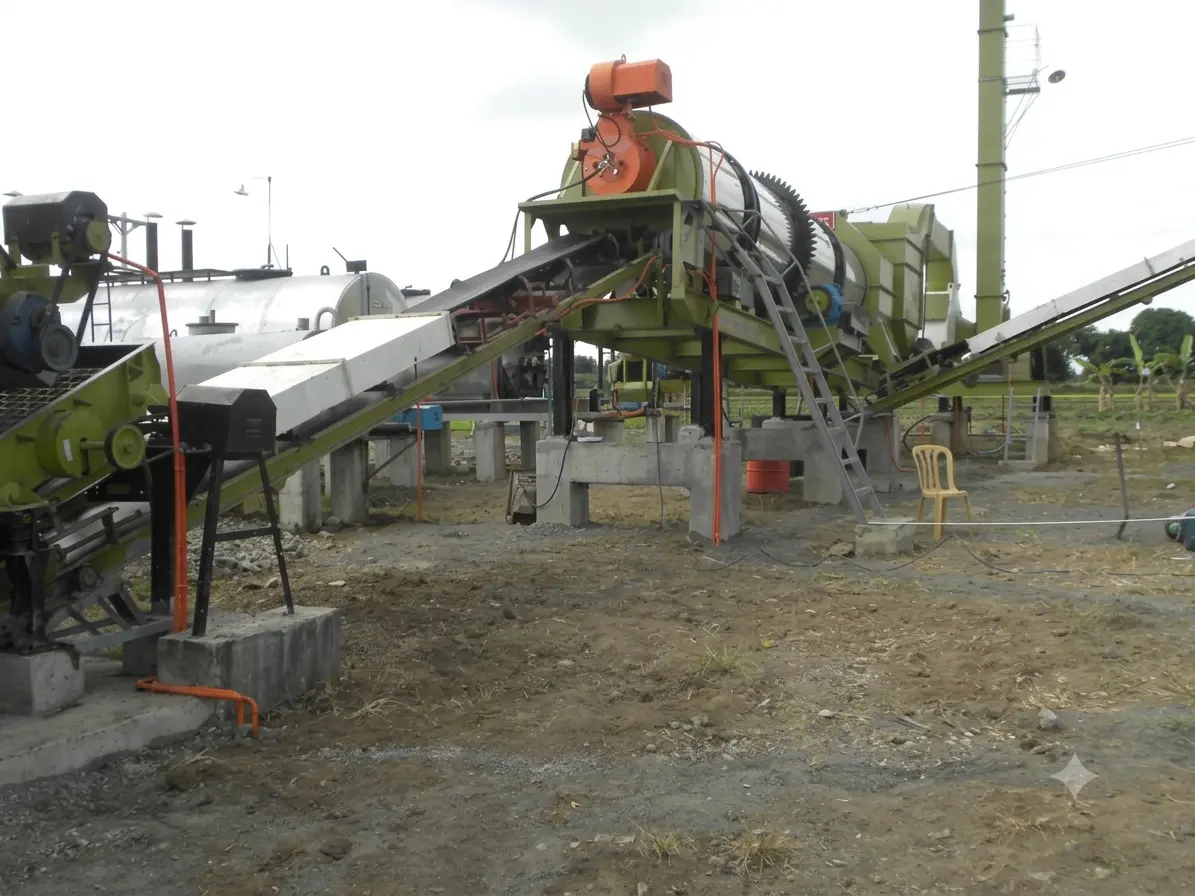
A contractor asks for a dambar plant. A supplier quotes an asphalt drum mix plant. Another buyer searches for a dambar plant.
In most cases, they mean the same type of asphalt production equipment.
The terminology may change from one contractor or region to another, but the equipment decision does not. Once you know a dambar plant usually refers to a drum mix asphalt plant, focus on production capacity, plant configuration, mobility, fuel, aggregate conditions, and the types of projects the plant will serve.
If you are evaluating a dambar plant for an upcoming road project, use this guide to identify what the equipment is, how it works, and which specifications should guide supplier comparison.
What Is a Dambar Plant?
A dambar plant is the term commonly used in India for an asphalt plant, particularly an asphalt drum mix plant .
The spelling and terminology may vary. You may hear or search for:
- Dambar plant
- Damar plant
- Drum mix plant
- Asphalt drum mix plant
- Drum mix asphalt plant
In practical terms, a dambar plant or drum mix plant is a continuous asphalt production system. Aggregates are proportioned through cold feeder bins, dried and heated in a rotating drum, and mixed with bitumen before the finished asphalt is discharged for loading into trucks or transferred to storage where required.
Unlike a batch mix plant , a drum mix plant produces asphalt continuously rather than in individual weighed batches. This makes it well suited to sustained production where mix requirements remain relatively consistent. Batch plants offer greater flexibility when mix designs need to change more frequently.
How a Dambar Plant Works
The basic process is straightforward. For a contractor, the key consideration is how each stage affects production consistency and actual site output. First, consider aggregate feeding.
Aggregate Feeding
Aggregates of different sizes are stored in separate cold feeder bins and proportioned according to the required mix gradation before being conveyed to the drum.
Inconsistent feeding can affect:
- Aggregate gradation
- Dryer loading
- Bitumen consumption
- Production consistency
- Final mix quality
For that reason, the cold feeder system should be evaluated as part of the overall plant specification rather than treated as a secondary component.
Drying and Heating
The aggregate enters the rotating drum, where the burner removes moisture and raises the material to the required temperature.
Rated capacity is a design reference. Actual output depends on aggregate moisture, material supply, burner performance, operator settings, and the operation's ability to support continuous production. This is why drying and heating conditions matter before output planning.
Wet aggregates require more energy to dry. Contractors operating through the monsoon or using uncovered aggregate stockpiles should account for the additional fuel requirement and its effect on actual output.
Bitumen Addition and Mixing
Bitumen is introduced after the aggregate has been heated and dried to the required condition. The exact arrangement depends on the drum and plant configuration.
Because production is continuous, variations in aggregate feeding, temperature, bitumen flow, or material supply can affect the entire production cycle rather than a single batch. That continuity also makes site logistics part of the same production discussion.
Asphalt Discharge and Site Logistics
The finished mix is discharged continuously for loading into trucks or transferred through a storage arrangement where required.
A high-capacity plant can only operate at its intended rate when aggregate supply, bitumen availability, truck movement, and paving operations can support continuous production.
This is particularly important on larger projects. Increasing plant capacity does not solve a production problem if trucks are unavailable, aggregate supply is inconsistent, or the paving operation cannot accept the material at the same rate.
Dambar Plant vs Drum Mix Plant: Is There Actually a Difference?
In Indian road construction terminology, a dambar plant and a drum mix plant generally refer to the same equipment.
Dambar plant is the commonly used field term, while asphalt drum mix plant is the more technical description.
The difference is usually terminology, not plant design.
When a contractor searches for a dambar plant or damar plant, the next question is not which of the two machines to buy, but which drum mix plant configuration suits the project.
That means looking at the production process, required capacity, plant mobility, drum configuration, and operating requirements before deciding on a plant.
What Determines Dambar Plant Price?
There is no single standard dambar plant price.
Two plants with the same rated capacity can differ substantially in price because the included equipment may differ.
The main factors include:
Capacity
Higher-capacity plants require larger drums, feeders, conveyors, burners, and supporting systems.
Mobility
Mobile and stationary plants have different structural, chassis, installation, and transport requirements.
Burner and Fuel System
Burner specifications and fuel arrangements affect both initial equipment cost and long-term operating expenses.
Pollution-Control Equipment
Dust collection and emissions-control requirements vary according to project and regulatory requirements. Include the required system when comparing plant quotations.
Automation and Controls
The level of automation can range from basic operating controls to PLC-based systems with additional monitoring and remote support capabilities.
For example, the Atlas MDM-25 supplied for the Maldives project included a PLC-based control panel with SCADA capability for remote troubleshooting.
Additional Equipment
The final package may also include:
- Bitumen storage tanks
- Fuel storage
- Additional aggregate bins
- Storage silos
- RAP systems
- Additive systems
- Dust collection equipment
- Automation upgrades
Compare quotations line by line.
Capacity and total price alone do not tell you whether two plant packages are equivalent.
What to Check Before Choosing a Drum Mix Plant Manufacturer in India
As of July 2026, India had 5,580 km of National High-Speed Corridors under implementation out of 10,389 km awarded .
For larger, time-sensitive road packages, contractors need to plan asphalt production around the full project operation rather than selecting equipment based only on a rated TPH figure.
However, plant specifications are only one part of the purchase decision.
You should also evaluate the supplier’s ability to design, commission, and support the equipment.
Plant Design for the Actual Project
A plant configuration that works well for one project may not suit another.
Before finalising the supplier, confirm how the proposed design accounts for:
- Required production capacity
- Aggregate characteristics
- Site conditions
- Available fuel
- Transport requirements
- Available installation space
- Future production requirements
Component Quality and Maintenance Access
Drum mix plants operate under continuous exposure to heat, dust, vibration, and abrasive materials.
Evaluate the components and design features that affect long-term operation, including:
- Bearings
- Drives
- Conveyors
- Drum construction
- Burner systems
- Pumps and valves
- Electrical components
Maintenance access also affects plant availability. Components that require regular inspection or replacement should be accessible without unnecessarily long shutdowns.
Customisation Capability
Some projects require modifications beyond a standard plant configuration.
Atlas Technologies provides customised solutions for project-specific requirements, including RAP integration and other plant configurations.
Discuss major requirements before manufacturing begins, rather than adding them after installation.
Installation and Commissioning
A plant reaching the site is not the same as a plant being ready for production.
Installation, calibration, trial production, and operator familiarisation all affect how quickly the equipment can begin operating as intended.
Service and Spare Parts
Plant downtime during an active paving schedule can affect the wider project operation.
Before selecting a supplier, clarify:
- Spare parts availability
- Technical support arrangements
- Availability of service personnel
- Response support
- Remote troubleshooting capability
Dambar Plant Capacity Options from Atlas Technologies
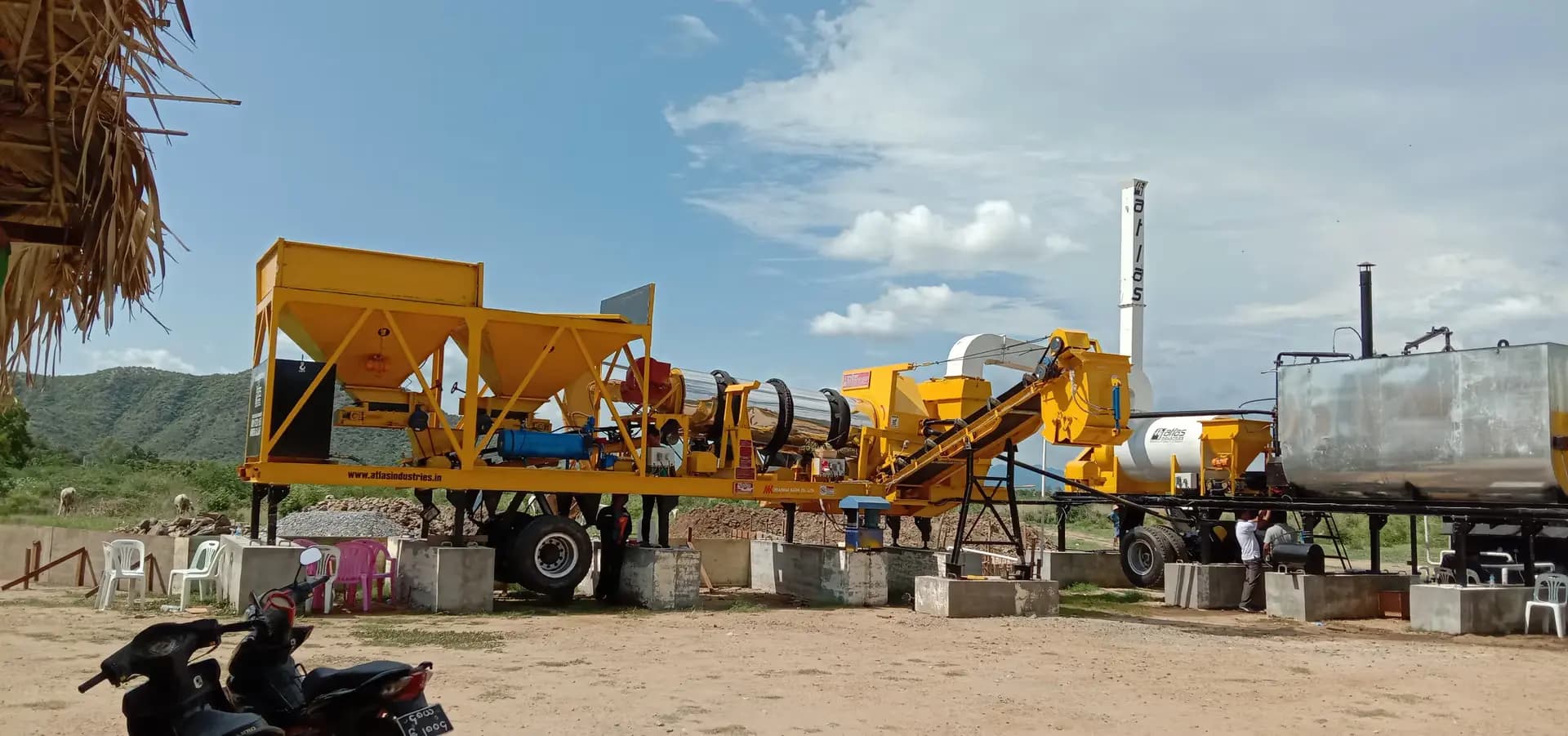
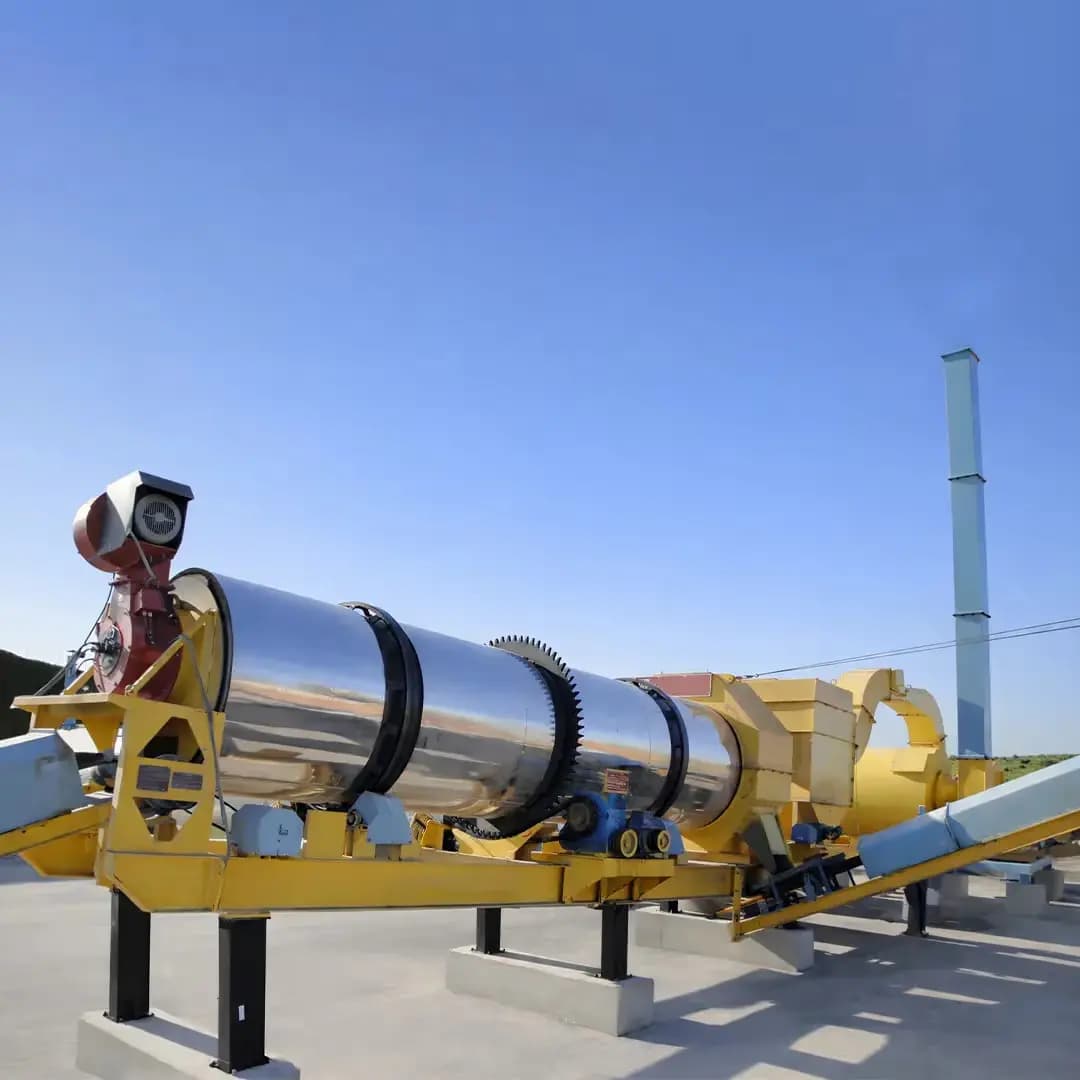
Atlas Technologies offers asphalt drum mix plants across different capacity ranges for varying project requirements.
| Model | Capacity | Type | Typical Application |
|---|---|---|---|
| MDM-25 | 20–30 TPH | Mobile Drum Mix Plant | Remote locations and projects requiring mobility |
| DM-45 | 40–60 TPH | Stationary Drum Mix Plant | Small and medium road projects |
| DM-50 | 60–90 TPH | Stationary Drum Mix Plant | Sustained production for medium-to-large road works |
| DM-60 | 90–120 TPH | Stationary Drum Mix Plant | High-volume asphalt production |
Final specifications should be based on the contractor’s material, production, and site requirements, not on selecting a model solely by nominal output.
The Bottom Line
For most Indian road contractors, a dambar plant is simply the commonly used term for an asphalt drum mix plant.
The equipment decision starts after that clarification.
Begin with the required daily asphalt output and paving schedule. Then assess whether aggregate supply, moisture conditions, truck movement, fuel availability, site logistics, and available operating hours can support that requirement.
This process will help determine:
- The right capacity range
- Whether a mobile or stationary configuration is more suitable
- The appropriate plant configuration
- The level of automation and supporting equipment required
- Whether a drum mix plant is the right production system for the contractor’s work
Atlas Technologies offers asphalt drum mix plants across different capacity ranges, including compact mobile configurations and larger stationary plants for sustained road construction production.
Author’s Note
Atlas Technologies Pvt. Ltd. is a road construction equipment manufacturer based in Mehsana, Gujarat, India. Founded in 1986, the company designs and manufactures asphalt batch mix plants, drum mix plants, counter flow plants, wet mix macadam plants, concrete batching plants and road machinery for highway contractors, infrastructure developers and export buyers worldwide.
With over 2,500 installations across 50+ countries and 38 years of manufacturing experience, Atlas Technologies serves projects ranging from national highway construction in India to remote island deployments and large-scale export contracts across Africa, Southeast Asia, the Middle East, East Europe and Oceania Countries.
www.atlastechnologiesindia.com

Mr. Nilesh Patel
Managing Director
Build the Plant Around Your Project
Let's evaluate the capacity and configuration of the right-fit drum mix plant that fits your production targets, site conditions, and future project requirements.
Talk to Our Engineers →Frequently asked
questions.
Dambar Plant vs Drum Mix...
A dambar plant is the commonly used Indian term for...
India Asphalt Pavers Market: Growth,...
India's asphalt pavers market is growing, but equipment decisions shouldn't...

Road Sweeper Machine vs Hydraulic...
Learn the difference between mechanical road sweepers and hydraulic broomers...
Batching Plant: What It Is,...
A batching plant measures, proportions, and processes raw materials according...