

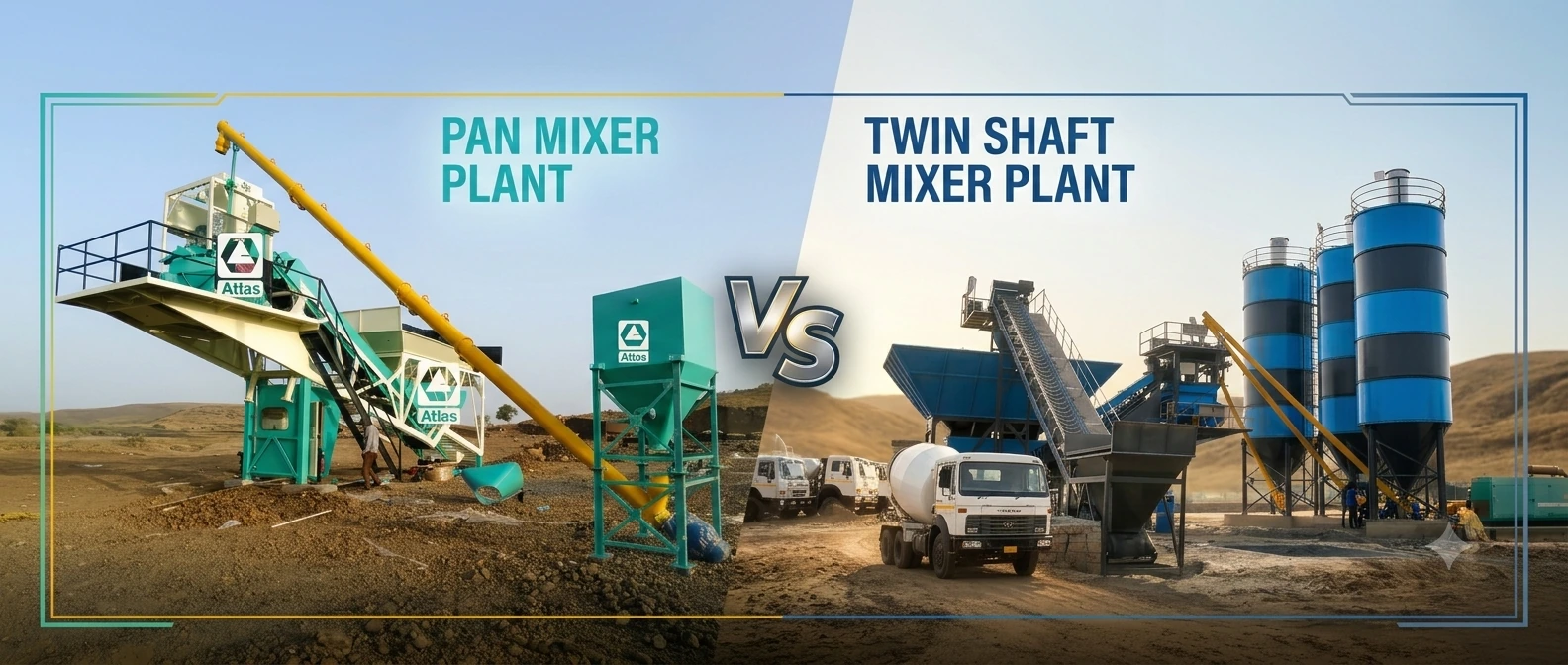
The mixer can determine whether a concrete batching plant keeps pace with the project or becomes the slowest part of the production cycle.
A contractor producing concrete blocks or pavers may prioritise a mixer that handles the required mix and fits a compact production setup. An RMC or large infrastructure operation may need shorter mixing cycles and higher batch output to meet daily production targets.
That is why choosing between a pan mixer and a twin shaft mixer should start with the concrete application and production requirement, not simply the mixer type.
This article explains how the two mixers differ, where each one is typically used and how to decide which configuration suits your concrete project.
What Should Decide Your Mixer Choice?
Before comparing machines, start with the production requirement.
The right concrete mixer depends on several connected factors:
- Type and consistency of concrete
- Required batch size
- Hourly and daily production target
- Application of the finished concrete
- Required mixing cycle
- Batching plant configuration
- Site and operating conditions
- Maintenance requirements
A mixer that performs well for one application may not be the right fit for another.
The question is therefore not which mixer is better in general. It is which mixer fits the way your project produces and uses concrete.
What Is a Pan Mixer?
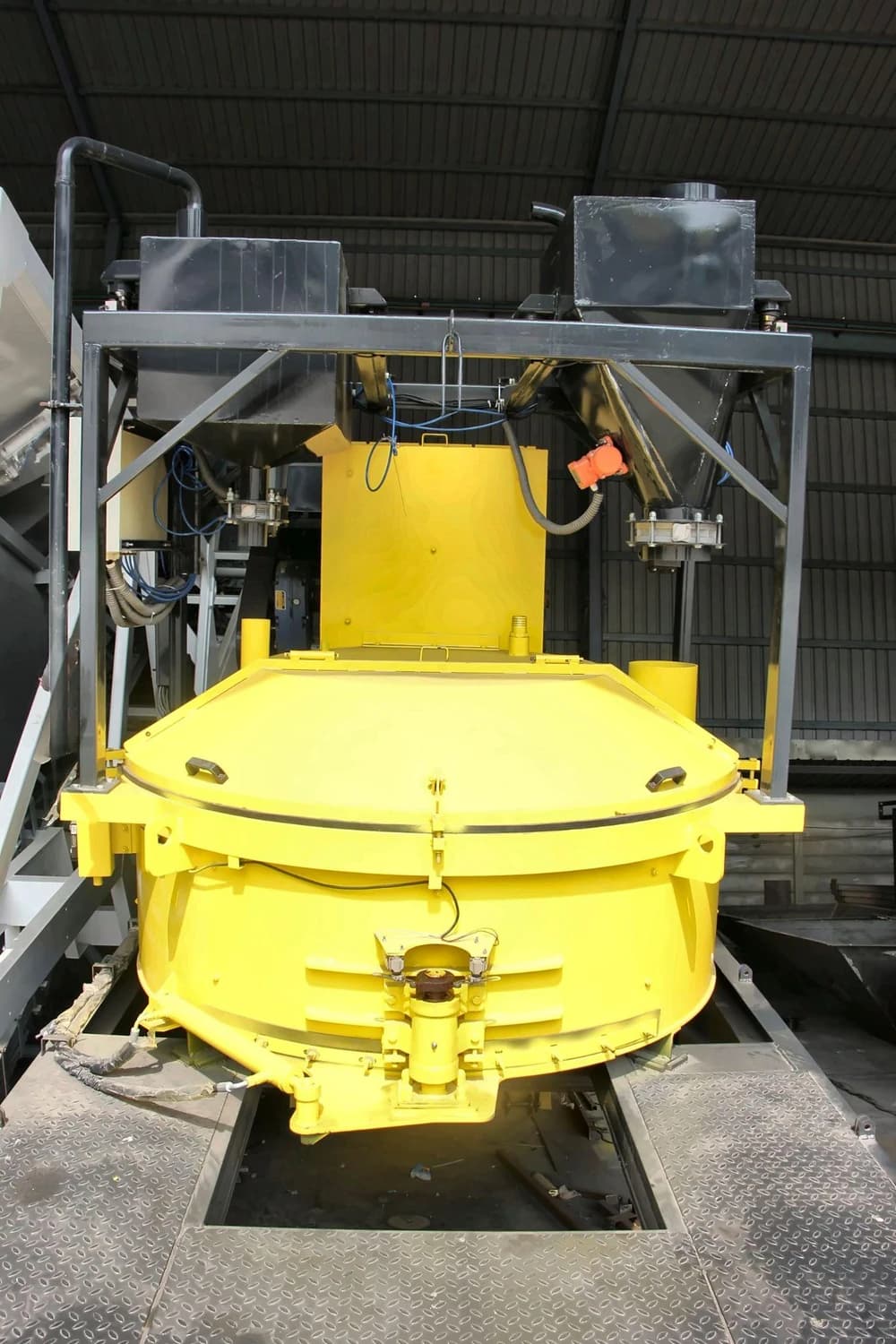
A pan mixer uses a circular pan as its mixing chamber. Mixing tools rotate inside the pan to blend the concrete ingredients, while scrapers help move material through the mixing zone and reduce material build-up on the chamber surface.
The mixer is commonly used for applications where the concrete mix and production process suit a pan-based mixing arrangement.
Typical applications include:
- Concrete blocks
- Pavers
- Precast products
- Kerb stones
- Other application-specific concrete products
Atlas’s ATMIX CLASSIC pan mixer plants are built for precast, block production and standard commercial concrete.
A concrete pan mixer machine can be particularly relevant where the concrete being produced is linked to a specific product manufacturing process rather than continuous high-volume RMC production.
What Is a Twin Shaft Mixer?
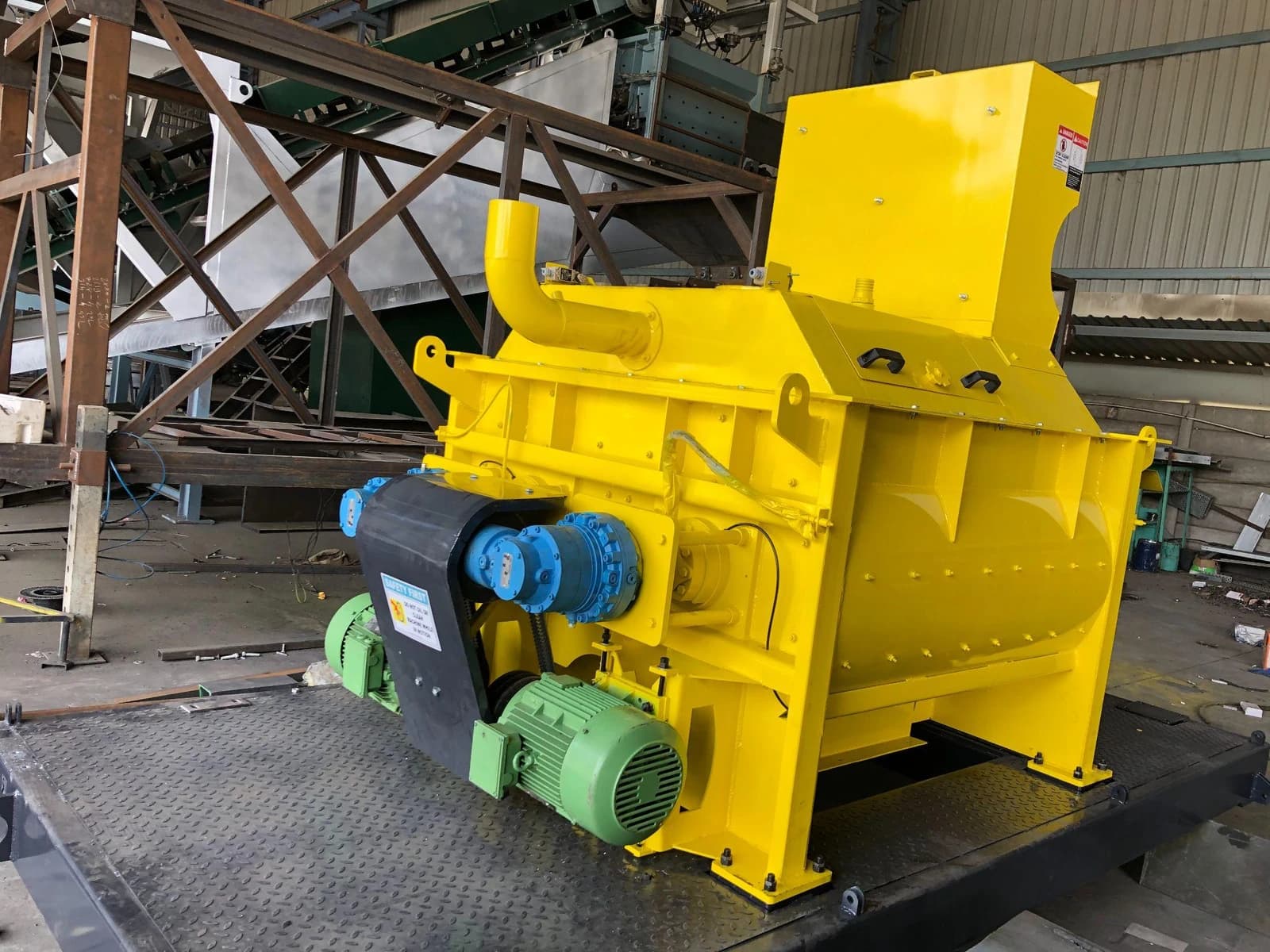
A twin shaft mixer uses two horizontal shafts fitted with paddles or mixing arms.
The shafts rotate within the mixing chamber, creating an intensive mixing action through the movement of material between and around the two shafts.
This type of mixer is commonly used in Atlas’s Stationary concrete batching plants where repeated batch cycles and higher production output are required.
Typical applications include:
- Ready-mix concrete production
- Large concrete batching plants
- Infrastructure projects
- High-volume concrete supply
The mixer can support plants where the production cycle needs to maintain a planned concrete output throughout the working day.
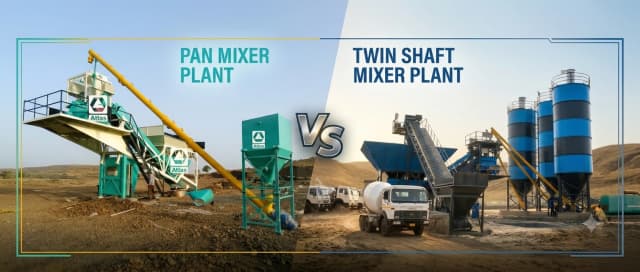
Pan Mixer vs Twin Shaft Mixer: The Main Differences
The decision between the two becomes clearer when the mixing mechanism, application and production requirement are considered together.
| Selection Factor | Pan Mixer | Twin Shaft Mixer |
|---|---|---|
| Mixing chamber | Circular or pan-shaped chamber | Horizontal chamber with two shafts |
| Mixing action | Rotating mixing tools blend material within the pan | Two shafts and paddles create intensive mixing action |
| Typical applications | Blocks, pavers, precast and related products | RMC, infrastructure and larger concrete production |
| Production setup | Product-focused and application-specific operations | Higher-volume batching operations |
| Batch cycle requirement | Suitable where production cycles are based on the specific application | Suitable where repeated batches and plant output are key considerations |
| Plant configuration | Can suit compact and specialised production setups | Commonly used in larger central mixing plants |
| Primary selection consideration | Concrete product and application requirements | Required output and production cycle |
The mixer type alone should not determine the final choice. Actual mix requirements, batch size and the complete plant configuration still need to be considered.
Don’t Let the Mixer Limit Your Plant Output
Tell Atlas Technologies what concrete you produce, your required output and the type of batching plant you need. We can help you evaluate the right mixer configuration for your production requirement.
Compare Mixers →Choose the Mixer as Part of the Complete Batching Plant
A mixer should not be selected as an isolated piece of equipment.
Its capacity and operating cycle have to work with the rest of the pan mixer batching plant or concrete production system, including:
- Aggregate storage and feeding
- Weigh batching systems
- Cement handling
- Water and admixture dosing
- Material charging
- Concrete discharge
- Overall batch cycle
A plant may have sufficient aggregate handling and weighing capacity for a particular production target, but its actual output can still be restricted if the mixing and discharge cycle cannot maintain that rate.
The opposite can also happen. Installing a larger mixer than the production requirement calls for can increase the equipment investment without providing a practical operational benefit.
The best approach is to define the required plant output first and then select a mixer that supports the complete production cycle.
Which Mixer Does Your Project Need?
Start with three practical questions.
What Concrete Are You Producing?
A pan type concrete mixer may be suitable for operations producing blocks, pavers, precast elements, kerbs and similar concrete products where the production process is built around a specific application.
A twin shaft mixer is commonly considered for ready-mix and infrastructure-focused concrete production where the plant needs to produce repeated batches at a planned output.
How Much Concrete Do You Need to Produce?
Look beyond the nominal capacity of the mixer.
The actual requirement should account for:
- Batch size
- Mixing time
- Charging and discharge time
- Number of batches required
- Hourly production target
The mixer must be capable of supporting the production rate expected from the complete plant.
How Will the Plant Operate Day to Day?
Consider the working pattern of the operation.
A product manufacturing facility may run according to the requirements of its block, paver or precast production line. An RMC or infrastructure project may require a continuous sequence of batches to maintain concrete supply.
That difference in operating pattern can be as important as the concrete mix itself when selecting between mixer configurations.
What Else Should You Check Before Finalising the Mixer?
The application and production target should lead the decision, but a few practical factors also need attention.
Maintenance Requirements
Mixers operate under abrasive conditions and require regular inspection.
Check:
- Access to wear parts
- Mixing blade and scraper replacement
- Cleaning requirements
- Availability of service support
- Expected maintenance downtime
Site and Plant Requirements
The selected mixer should also fit the available plant layout, power supply and material handling arrangement.
This is particularly important when specifying a mixer for a new batching plant rather than replacing an existing unit.
Selecting a Concrete Mixer with Atlas Technologies
Atlas Technologies can help contractors and concrete producers evaluate the right mixer configuration based on the complete production requirement.
Before recommending a setup, the key considerations include:
- Concrete application
- Required output
- Batch size
- Production cycle
- Batching plant configuration
- Site requirements
This helps ensure the mixer is selected for the way the plant will actually operate.
For example, a twin-shaft 45 m³/hr mobile plant in the Philippines was configured for multiple ready-mix grades on a medium-sized infrastructure project.
Author’s Note
Atlas Technologies Pvt. Ltd. is a road construction equipment manufacturer based in Mehsana, Gujarat, India. Founded in 1986, the company designs and manufactures asphalt batch mix plants, drum mix plants, counter flow plants, wet mix macadam plants, concrete batching plants and road machinery for highway contractors, infrastructure developers and export buyers worldwide.
With over 2,500 installations across 50+ countries and 38 years of manufacturing experience, Atlas Technologies serves projects ranging from national highway construction in India to remote island deployments and large-scale export contracts across Africa, Southeast Asia, the Middle East, East Europe and Oceania Countries.
www.atlastechnologiesindia.com

Mr. Nilesh Patel
Managing Director
Get the Right Mixer for Your Production Target
Share your concrete application, required output and plant requirements with Atlas Technologies. Our team can help you identify a mixer and batching plant configuration suited to your production process.
Discuss Your Plant →Frequently asked
questions.
Asphalt Plant for Caribbean and...
Buying an asphalt plant for the Caribbean or Latin America?...
Bitumen Storage Tank: How to...
How to size a bitumen tank for your asphalt plant,...
Pan Mixer vs Twin Shaft...
Pan mixer vs twin shaft mixer: how each works, typical...
Concrete Paver for Kerb Laying:...
How a concrete kerb laying machine works, compact vs higher-capacity...